
Environmentally Friendly Products
Speakers
We are accelerating moves to develop basic technologies for next-generation speakers for eco-friendly vehicles and to introduce such technologies to commercial products.
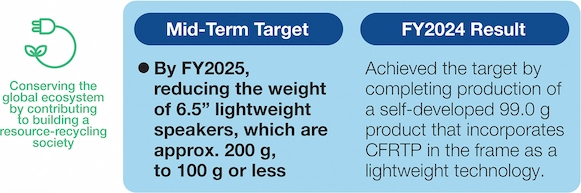
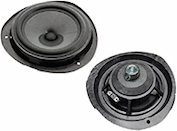
Reduce the weight of speakers
We are using CAE analysis to optimize the design of resin and metal components and study carbon fiber reinforced thermoplastics (CFRTP) as new materials. We are also working to commercialize self-developed products, incorporating lightweight technologies to address concerns related to EVs, particularly extending their range and improving their power consumption efficiency.
Reduction of volatile organic compounds (VOCs)
As initiatives to reduce the volume of VOCs remaining at production sites and in the passenger cabins of vehicles, we have cut the use of organic solvent adhesives for bonding parts and drive the development and adoption for commercial products of an adhesive with a reduced solvent content.
We are also committed to the development of bonding methods which do not use adhesives, such as use of quick-drying adhesives and ultrasonic bonding that do not use a drying furnace, as well as clamp terminal and tinsel wire (no soldering).
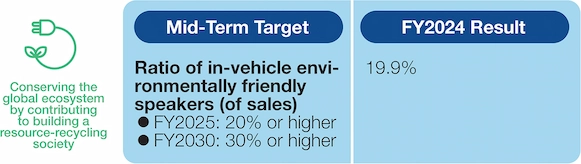
- *We will continue development and introduction with a target of achieving 30% as the ratio (to net sales) of commercialized car speakers incorporating these environmental technologies.
Reduction of CO2 emissions
We are undertaking design development activities for reducing power consumed in manufacturing speakers to cut CO2 emissions. We are making development efforts to achieve the mid-term CO2 emissions reduction target, by improving and changing methods of bonding parts and by reducing the use of a drying furnace in stages.
Actuators
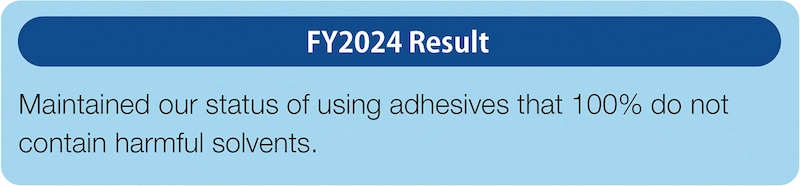
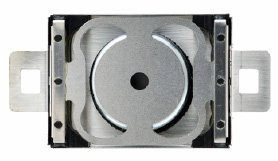
We proactively apply environmentally friendly design to haptic vibration actuator devices, which are a part of new user interfaces for CASE*, VR, AR, and other technologies. In consideration of VOC emissions, we have adopted adhesives that do not contain harmful solvents. To reduce the labor necessary to manufacture products, we have realized quick curing using UV radiation and pulse heat soldering. In addition, to reduce solder consumption, we have developed resistance welding, etc. and put it to practical use.
- *CASE: Connected, Autonomous, Shared, Electric
Headphones and Headsets
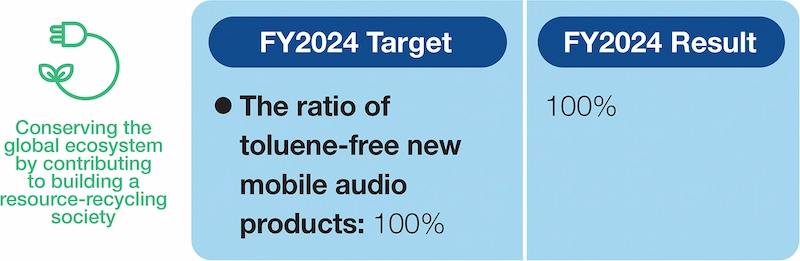
We have been active in incorporating environmental considerations in our product and/or process design. In reducing environmentally hazardous substances in our products, we address the most up-to-date information regarding country-specific legal requirements and the RoHS2, and propose to our customers. In addition, to reduce the energy consumed during manufacturing and the volume of waste materials, we need to continue to minimize waste materials, reuse raw materials by introducing new equipment, and develop products made of natural materials. For products with electronic circuits, we have adopted power-saving parts in our efforts to develop products with low power consumption. For microspeakers used for headphones or headsets, we are working towards environmentally friendly product manufacturing by introducing adhesives that do not contain toluene for new microspeakers in order to reduce VOCs. (replacing the parts that use solvent adhesives.)
As a mechanism for achieving our targets, we have built an internal system to examine whether toluene is used in the development and design phases and continue to check that products are toluene-free every month thereafter. We are also exploring alternative adhesives on an ongoing basis.
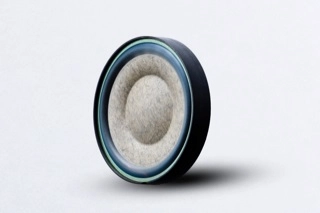
(microspeaker with a 35 mm diameter for headphones)
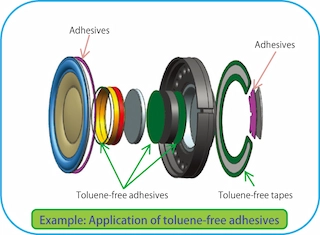
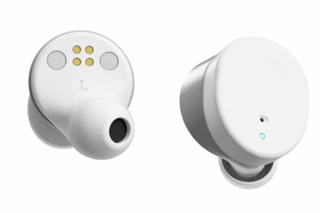
(Bluetooth wireless earphones)